Fertility 101 · Free tool
When will I ovulate?
Enter the first day of your last period and your average cycle length to estimate your ovulation day, your 6-day fertile window, and the start of your next period.
The Ovulation Calculator provides approximate predictions based on the data you enter. It should not be used as a diagnostic tool, a method of contraception, or a substitute for medical consultation.
How Does an Ovulation Calculator Work?
A standard ovulation calculator basically guesses your ovulation day by calculating your menstrual cycle and subtracting 14. For most women, ovulation occurs about 14 days before their next period begins – hence the clever math. However, just like every woman is individual and unique, every woman's cycle is as individual and unique as she is. This little detail makes calculators slightly less reliable if you lead a very active lifestyle, travel often, have recently gained or lost a significant amount of weight, have a high BMI, or have been diagnosed with PCOS, endometriosis, or regularly take certain medications.
Standard calculators: These provide fairly reliable predictions if your cycles are regular – between 21–35 days. They subtract 14 days from the anticipated start of your next period and give you a relative window, give or take a few days. For irregular cycles, standard calculators may fall short, making it necessary to supplement with other ovulation indicators such as basal body temperature (BBT), cervical mucus changes, or saliva ferning.
Calendar tracker apps: A slightly more sophisticated approach, but most popular period tracker apps work like a calendar dressed up in pink. They too rely on your past inputs to "predict" when you'll ovulate based on predetermined averages hard coded into their software. That's fine if your cycles are like clockwork, but for the rest of us (hi, stress, travel, workouts, and meds), it's more guesswork than guidance.
How to Calculate Ovulation Based on Your Cycle Length
Your cycle length directly impacts your ovulation date. For example:
- A 30-day cycle usually sees ovulation around day 16.
- Shorter cycles, like a 21-day cycle, may see ovulation around day 7.
When Do I Ovulate?
How Many Days After My Period Can I Get Pregnant?
Typically, women with regular cycles become fertile about 7–10 days after their period ends. However, exact timing depends on your cycle length and individual hormonal variations. Using a fertile window calculator or fertility calendar can give you a ballpark range, but won't pinpoint the exact moment of ovulation.
If My Period Lasts 3 or 5 Days, When Do I Ovulate?
- For a 3-day period, ovulation often occurs around day 14 of your cycle.
- If your period lasts 5 days, expect ovulation around day 15.
These guidelines are very general. Only about 10% of women actually ovulate exactly 14 days before their next period. In some cases ovulation can range from day 8 to day 21, even for relatively regular cycles.
What Is a Fertile Window and Ovulation Day?
Your fertile window typically spans 6 days: five days before ovulation and the day of ovulation itself. A healthy egg is viable for approximately 12–24 hours, while sperm can survive 3–5 days. This means that knowing and timing your fertile window is sometimes more important than pinpointing ovulation day. Timing the onset of the fertile window and getting to work early significantly improves your chances of becoming pregnant.
Beyond prediction
Best Ovulation Calendar App
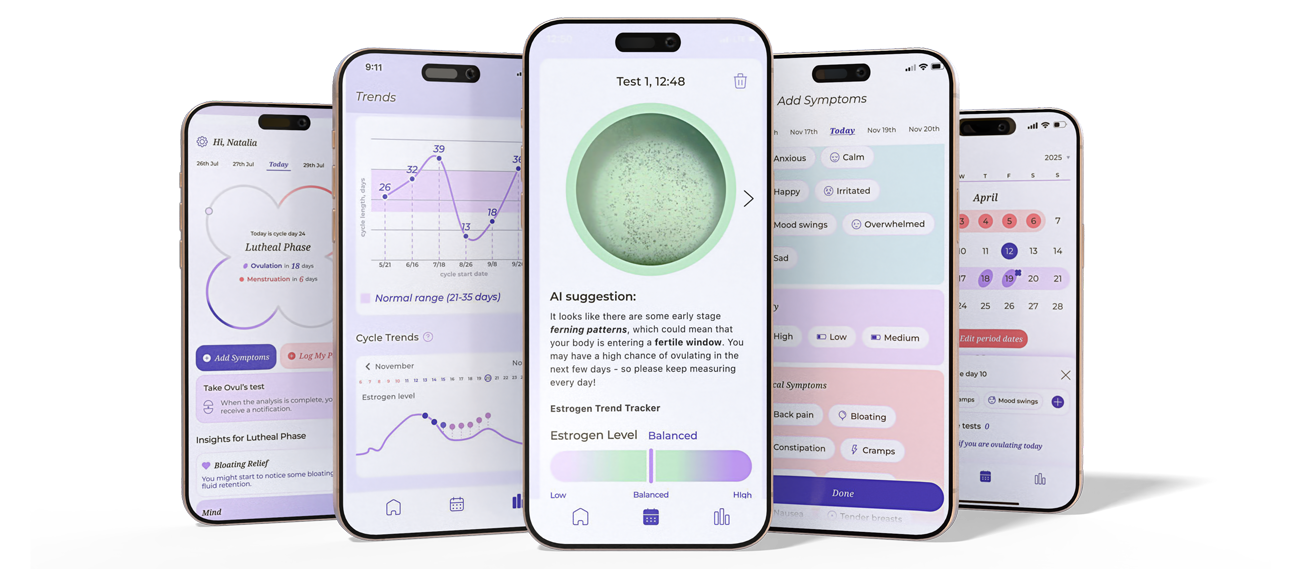
If you're looking for an ovulation calculator app that delivers real-time hormone analysis instead of just averages and predictions, then you're going to love Ovul. Ovul uses AI-powered saliva testing to analyze your personal estrogen trends, and provides precise biological data regarding ovulation days, stress impact, travel-related hormonal shifts, and even signs of early menopause.
Ovul goes beyond prediction and straight into detection. With saliva analysis, Ovul can detect the onset of your fertile window up to 6 days before ovulation day, and pinpoint ovulation with a 96% accuracy in clinical studies.
Irregular Period Ovulation Calendar
Women experiencing irregular cycles face challenges with standard calculators and ovulation calendar apps. Conditions such as obesity, thyroid disorders, PCOS, stress, and certain medications like NSAIDs or psychiatric drugs can affect ovulation. Ovul's AI saliva testing first builds your personal hormone profile, then detects the slightest hormonal changes precisely, offering tailored tracking ideal for irregular cycles.
How Weight and BMI Affect Ovulation
Carrying a little extra weight can throw off your hormones. Your body starts making more estrogen from fat tissue, which can confuse your brain and ovaries and make it harder to release an egg on time. Some women with a higher BMI also have irregular periods or skip ovulation altogether. Here's how BMI breaks down:
- A BMI between 18.5 and 24.9 is considered a healthy range.
- 25 to 29.9 is considered overweight.
- 30 or more is in the obese range.
The good news: most women with higher BMIs still ovulate, it just might be less predictable. Studies show that even in women with higher or borderline BMI, saliva-based ovulation testing (like what Ovul uses) can still accurately detect hormone changes and ovulation. The key is daily testing to allow Ovul's AI to build your personal baseline and then look for the slightest changes indicative of fertile window and ovulation.
What Is Anovulation and Why Does It Matter?
Anovulation means your body didn't release an egg this cycle. You might still get a period (or something that looks like one), but without ovulation there's no egg to meet the sperm. The most common reason is PCOS, but high stress, being underweight or overweight, thyroid problems, or some medications can play a role too. Most of the time, anovulation is treatable — and if you're tracking your cycle with Ovul, the AI can help you spot when you're not ovulating by analyzing your saliva patterns.
Nutrition and Supplements for Optimal Fertility
The food you eat and the nutrients your body gets can have a powerful effect on your hormones, your cycle, and even the quality of your eggs. Below are some "Do's" and "Don'ts" to keep in mind when you're nourishing your body for fertility.
Nutritional "DO's"
- Mediterranean-style diet (fish, whole grains, fruits, veggies, plant protein): consistently linked to improved ovulation and fertility.
- Omega-3 fats (e.g., fatty fish): support hormone production and egg quality.
- Full-fat dairy: daily intake linked to 27% lower infertility risk vs. low-fat dairy.
- Low-GI carbs & plant proteins: benefit ovulation health.
Supplement "DO's"
- CoQ10: boosts egg and embryo quality — especially in low reserve or older women.
- Inositol (Myo- & D-chiro): stabilizes insulin and improves ovulation in PCOS.
- Vitamin D: aids ovarian reserve and may improve IVF outcomes.
- DHEA: improves egg quality in diminished ovarian reserve.
- Iron & antioxidants: broad support for reproductive health.
Fertility "DON'Ts"
- Megadoses of vitamins A/E: studies have shown these may increase risk of birth defects.
- Herbs like black cohosh, licorice, and yohimbe: these may disrupt hormone balance.
- Weight-loss stimulants: increased risks to pregnancy health, which may lead to premature birth.
- Tobacco, alcohol, and illicit drugs: smoking tobacco has been shown to lower ovarian reserve and affect hormonal balance.
Medications and Fertility Impact
Some prescriptions (and even over-the-counter meds) can quietly interfere with ovulation, hormone balance, or your ability to get pregnant.
- NSAIDs (naproxen, ibuprofen): naproxen use while trying to conceive may reduce fecundability.
- GLP-1 medications (Ozempic): can go either way when trying to get pregnant — discuss with your doctor.
- Birth control: generally quick fertility return, except Depo-Provera, which can delay fertility for up to 10 months.
- Psychiatric medications: risperidone (Risperdal) may increase prolactin, which can prevent ovulation.
Consult your healthcare provider about medication adjustments when planning pregnancy.
Test daily — Live Healthy, Love Ovul
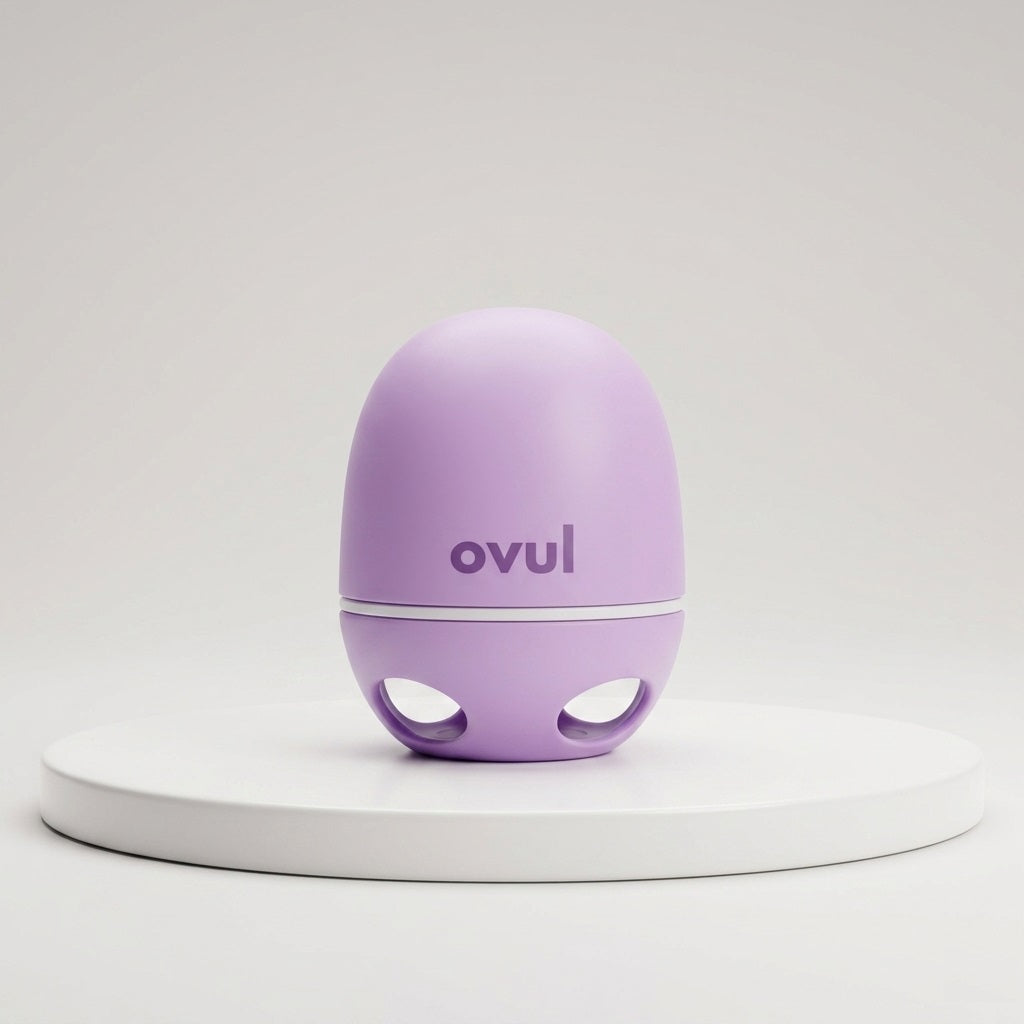
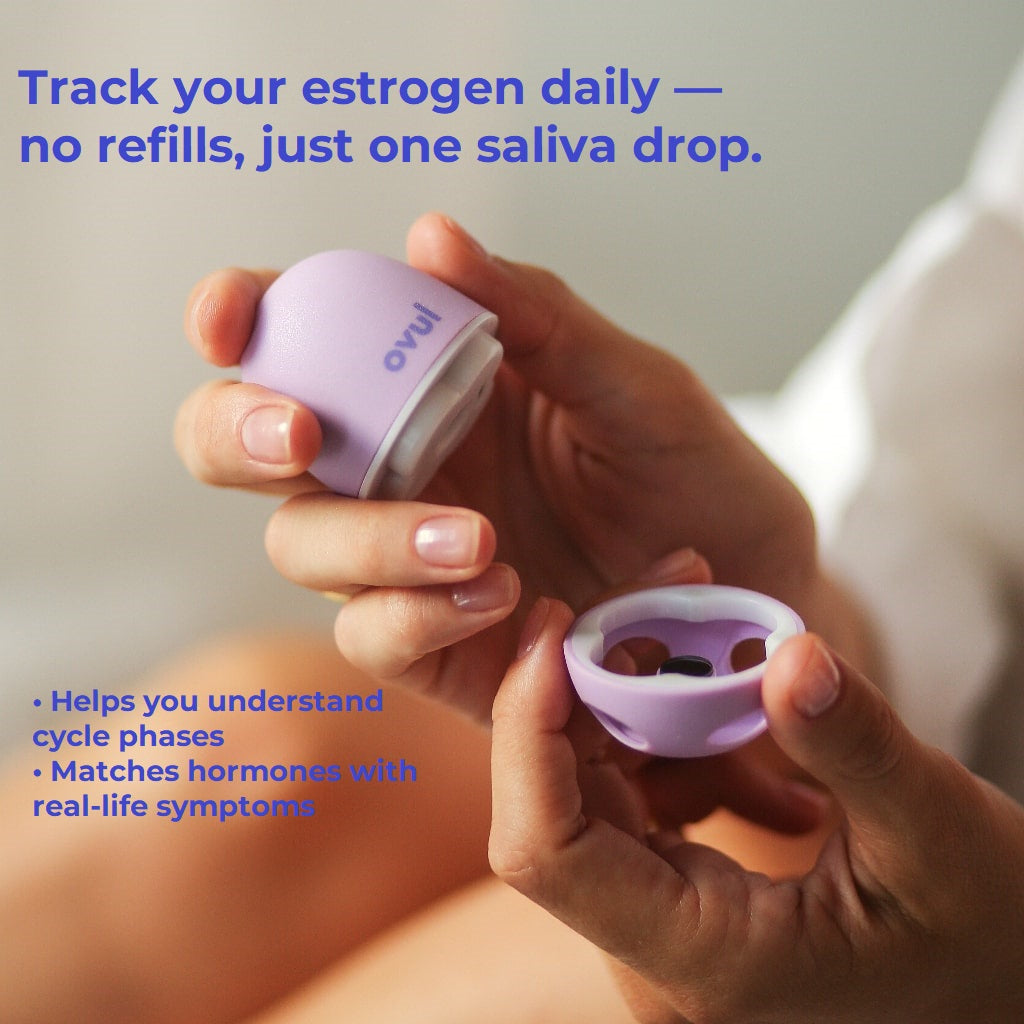
A good ovulation calculator is a great start, but pairing it with real data is where the magic happens. With smart, AI-powered saliva testing, it has never been easier to monitor hormones, track your cycle, and detect ovulation. Fertility isn't "one-size-fits-all", and your tracking method shouldn't be either.
Detect, instead of predict
Go from rough estimates to real ovulation detection
Plans start at $149.99 for the device and 3 months of membership. Membership renews at $18.99/mo after the included term. Free app, no refills, no consumables.