
Have you ever noticed unusual cramps and wondered if they were linked to ovulation or early pregnancy? You’re not alone. About one in five people who menstruate experience ovulation pain, while roughly a quarter report some form of implantation symptoms. The main difference lies in timing: ovulation cramps usually appear mid-cycle, while implantation occurs 6–12 days later. In this article, we’ll explore how to distinguish between the two — from location and intensity to associated signs — so you can better understand what your body is signaling.
What Are Ovulation and Implantation Cramps?
Ovulation cramps happen mid-cycle when the ovary releases an egg. This discomfort is often short-lived and linked to hormonal changes, follicle rupture, and fluid in the abdominal cavity.
Implantation cramps, on the other hand, occur when a fertilized egg attaches to the uterine lining. This can cause very light contractions and subtle pulling sensations in the lower abdomen. Timing, intensity, and duration help distinguish the two.
If you’re curious about related cycle symptoms, check out our guide on ovulation bleeding.

Ovulation Cramps Explained
What Causes Ovulation Cramps?
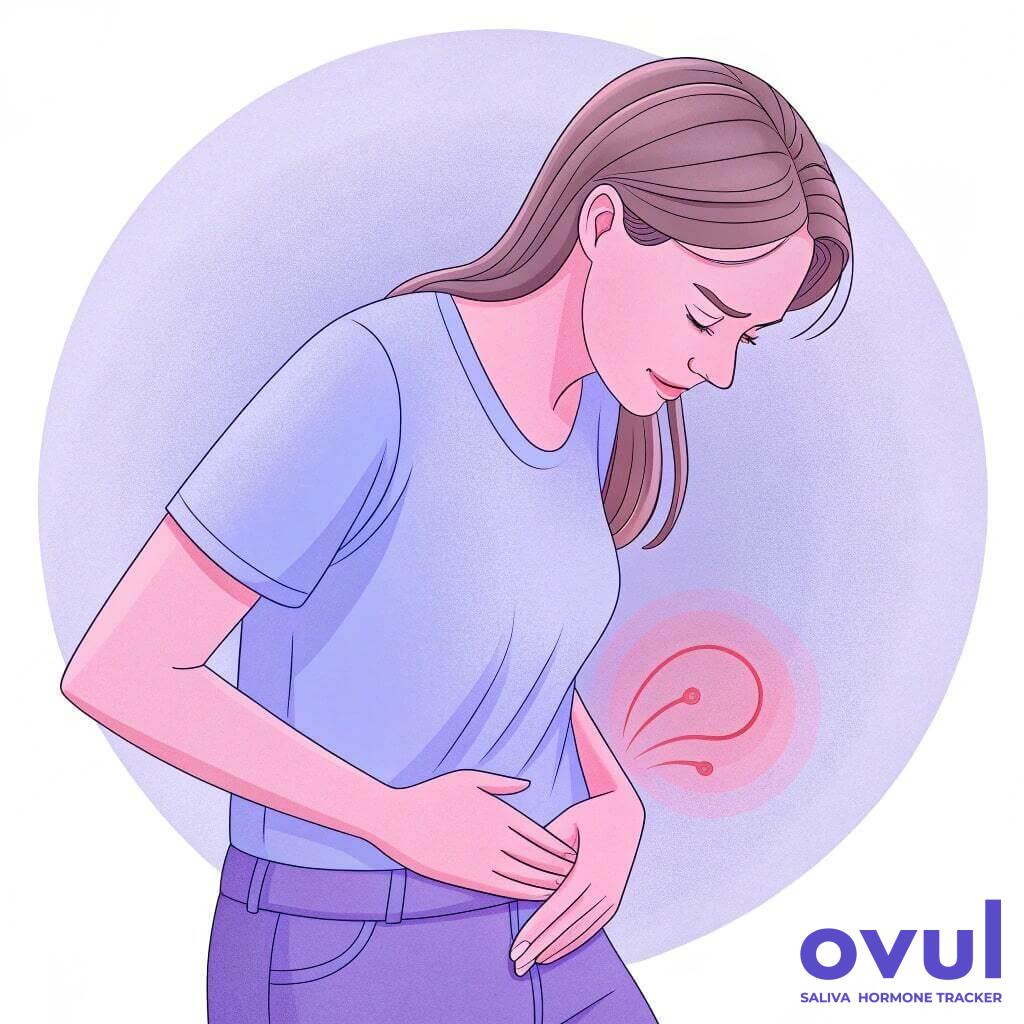
Follicle growth can create tension on the ovarian surface. Follicle rupture releases an egg along with fluid and trace blood that irritates surrounding tissue. Hormonal shifts stimulate uterine contractions. Some women also notice light spotting during ovulation.
When Do Ovulation Cramps Occur?
They usually appear between cycle days 10–16. Traditional methods like basal body temperature or an ovulation calculator and fertility tracker can give estimates, but these rely on averages. Flo and Clue, two of the most popular calendar apps, work the same way. They predict fertile windows based on user logs. If you forget to enter data or have irregular cycles, the predictions become unreliable. Our Flo vs Clue comparison explains why calendar apps often miss the mark for TTC.
What Do Ovulation Cramps Feel Like?
The sensation is usually on one side of the lower abdomen, dull or sharp, lasting a few minutes to two days. The side often alternates depending on which ovary releases an egg.
What Causes Implantation Cramps?
Implantation occurs 6 –12 days after ovulation when a fertilized egg burrows into the uterine lining. This process can trigger light uterine contractions and sometimes mild spotting.
When Do Implantation Cramps Occur?
Implantation cramps happen closer to the expected period. By your first missed period, implantation has already occurred - usually 2 to 8 days earlier. Unlike menstrual cramps, they are shorter and less intense.
What Do Implantation Cramps Feel Like?
Implantation cramps are typically mild, intermittent, and felt more centrally than ovulation cramps. Some women describe tingling or gentle pulling. Not experiencing them does not rule out pregnancy.
What happens during implantation
Implantation occurs much later — 6–12 days after ovulation if the egg has been fertilized. By this point, the zygote has divided into a blastocyst and traveled to the uterus. The blastocyst must attach to the uterine lining, which has been thickened by progesterone after ovulation.
Implantation cramps are caused by the blastocyst embedding into the endometrium. They are usually mild and felt in the center of the lower abdomen, unlike the one-sided nature of ovulation cramps. Some people also experience implantation bleeding (light pink or brown spotting), breast tenderness, or fatigue.
It’s important to note that only about 30% of women report cramping during implantation, and many pregnancies progress without any noticeable discomfort.
Why timing is the key difference
One of the easiest ways to tell the difference between ovulation and implantation cramps is timing.
- Ovulation cramps appear mid-cycle (days 11–14 in a 28-day cycle).
- Implantation cramps happen later (days 20–24 in the same cycle).This separation of at least 6 days makes timing one of the most reliable indicators.
In addition, the symptoms differ: ovulation may be accompanied by cervical mucus changes, basal body temperature shifts, and increased sex drive. Implantation may bring light spotting, breast sensitivity, and early pregnancy fatigue.
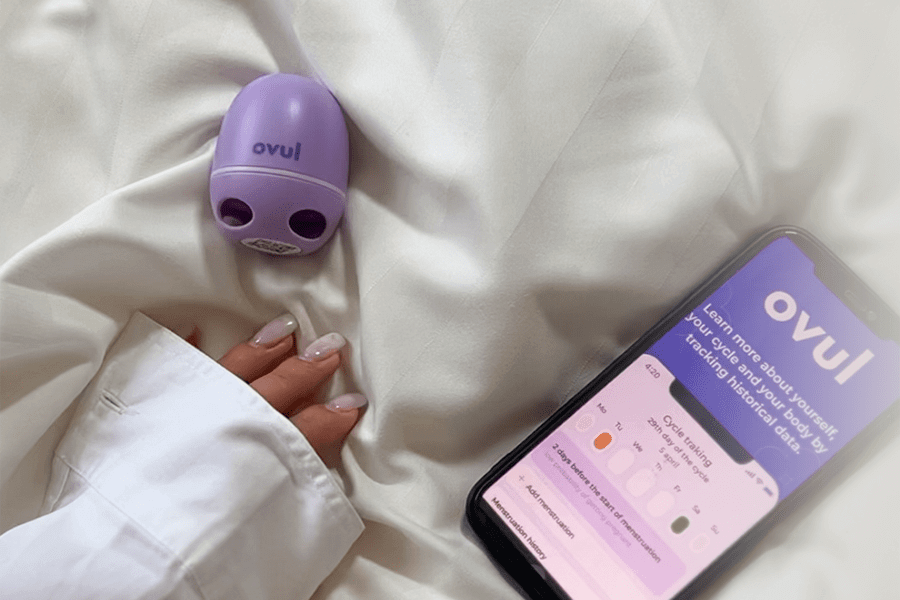
Stop Guessing. Start Knowing.
Precision, AI-powered ovulation tracking for true clarity — no more “maybe.”
Get My Digital TestOvulation vs Implantation Cramps: Key Differences
Here’s a side-by-side comparison:
|
Factor |
Ovulation Cramps |
Implantation Cramps |
|
Timing |
Mid-cycle (Day 11–14) |
6–12 days after ovulation (Day 20–24) |
|
Location |
One-sided, near the ovary |
Central, lower abdomen |
|
Intensity |
Sharper, more noticeable |
Milder, pulling or tingling |
|
Duration |
Minutes to 2 days |
Hours to 1–3 days |
|
Other signs |
Cervical mucus, libido rise, LH surge |
Light spotting, breast tenderness, fatigue |
Early pregnancy cramps
Cramps can also continue into early pregnancy as the uterus adjusts to hormonal and structural changes. Unlike ovulation pain, which fades within two days, pregnancy cramps may appear intermittently for weeks.
Other pregnancy symptoms include:
- missed period,
- nausea,
- fatigue,
- breast changes,
- mood swings.
While cramps can hint at early pregnancy, only a test can confirm it.
When cramps might mean something else
Not all mid-cycle discomfort is linked to ovulation or implantation. Other possible causes include:
approaching menstruation,
- digestive issues,
- ovarian cysts or fibroids,
- endometriosis,
- pelvic infections.
Medical attention is recommended if cramps are severe, persist longer than expected, or come with unusual symptoms such as fever, nausea, or abnormal discharge. In rare cases, sudden severe pain may point to ectopic pregnancy or appendicitis, which require urgent care.
How Can I Tell If Implantation Occurred?
Implantation itself is invisible, but your hormones provide early clues. Two different tools can help, though they work in very different ways:
- Pregnancy tests (hCG detection):
- hCG is only produced after implantation has occurred.
- A blood pregnancy test can detect hCG about 1–2 days after implantation (roughly 7–10 days after ovulation).
- Most urine pregnancy tests turn positive about 3–4 days after implantation (around 12–14 days after ovulation, when your first missed period is due).
- hCG is only produced after implantation has occurred.
- Ovul (estrogen tracking, indirect clue):
- In a non-pregnant cycle, estrogen dips at the end of the luteal phase to trigger your period.
- If implantation succeeds, embryo signals keep estrogen steady or push it slightly higher instead of letting it drop.
- Because Ovul AI tracks estrogen every day, it can spot this “no dip” pattern before hCG tests turn positive.
- Ovul isn’t a pregnancy test, but it can give you an earlier, indirect hint that implantation may have taken place.
- In a non-pregnant cycle, estrogen dips at the end of the luteal phase to trigger your period.
Ovulation Tracking vs Hormone Testing
Ovulation tracking apps like Flo and Clue are great, but they can provide predictions only. Hormone monitors like Mira and Inito go a step further by offering at-home hormone testing, but with a significant upfront and ongoing costs. You can get a breakdown of Mira vs Inito fertility trackers here.
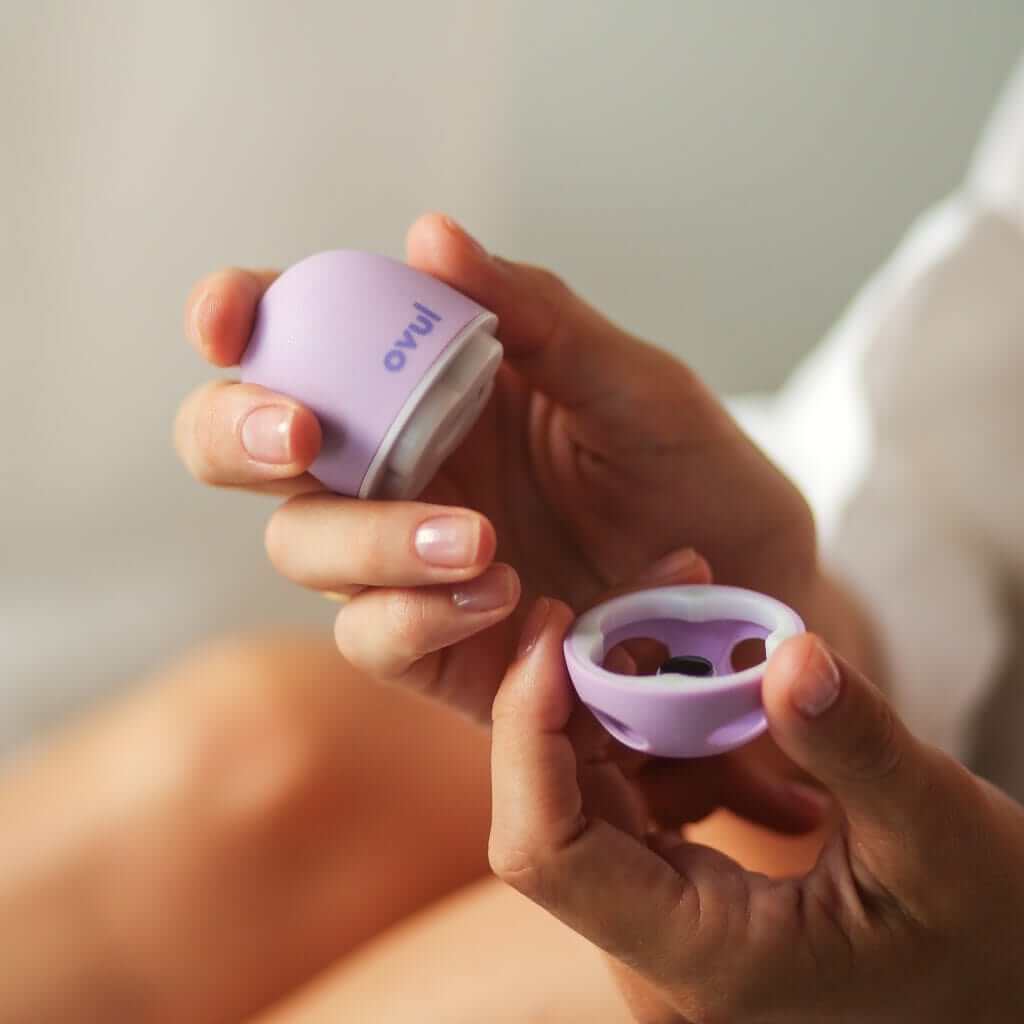
The Ovul fertility tracker takes a different approach. Instead of consumable wands, Ovul is a reusable saliva analyzer that measures estrogen - daily or even hourly. By building your personal estrogen baseline, Ovul AI can distinguish between fertile windows, ovulation, and broader hormone health patterns, especially if you’re managing PCOS or irregular cycles.
Conclusion
When you’re TTC, every twinge makes you wonder: is this it? Distinguishing between ovulation cramps and implantation cramps can give you some answers, but only hormone tracking can truly show what’s happening beneath the surface. That’s where Ovul changes everything. By following your estrogen patterns day by day, Ovul gives you an early window into your fertility and hormone health — even before a pregnancy test can confirm it.
To support you on this journey, Ovul is offering one year of unlimited saliva testing, free. It’s our way of giving you clarity when you need it most, so you can stop guessing and start trusting your body’s signals.

Frequently Asked Questions
How can I distinguish between ovulation cramps and implantation cramps?
The key difference lies in timing and location. Ovulation cramps typically occur mid-cycle (around day 14 in a 28-day cycle) and are felt on one side of the lower abdomen. Implantation cramps happen 6-12 days after ovulation, closer to your expected period, and are usually felt centrally in the lower abdomen.
What do implantation cramps feel like compared to ovulation pain?
Implantation cramps are generally milder, described as a light pulling, tugging, or tingling sensation in the lower abdomen. Ovulation pain is often sharper, sometimes described as a sudden twinge or dull ache on one side of the lower abdomen.
Can ovulation symptoms be mistaken for early pregnancy signs?
Yes, it's possible to confuse ovulation symptoms with early pregnancy signs. Both can involve mild cramping and light spotting. However, ovulation occurs mid-cycle, while early pregnancy symptoms, including implantation, happen closer to when you'd expect your period.
How long do implantation cramps typically last?
Implantation cramps usually last anywhere from a few hours to 1-3 days. They are generally shorter in duration compared to menstrual cramps and tend to be milder in intensity.
What other symptoms might accompany implantation cramps?
Along with mild cramping, you might experience light spotting, breast tenderness, unusual fatigue, slight nausea, bloating, and mood changes. However, it's important to note that many women experience successful pregnancies without noticing any implantation symptoms.
Still have a question? Contact us?
A Year of Fertility Clarity
12 months of hormone insights, AI ovulation monitoring, total peace of mind.
Unlock My Plan