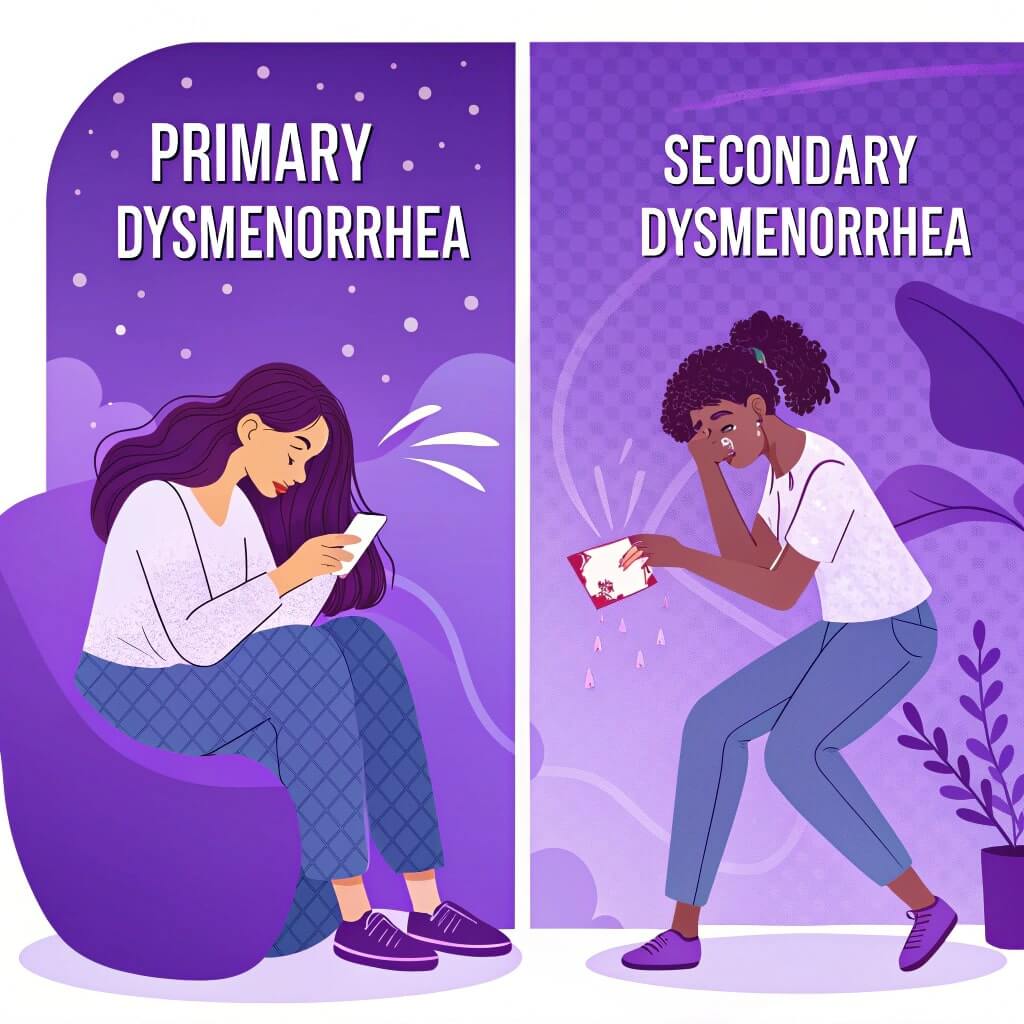
Are painful periods really a sign of good fertility? Despite the common myth, there’s no scientific evidence to support this idea. In fact, conditions like endometriosis—marked by severe menstrual pain—affect around 1 in 10 women of reproductive age worldwide, often misdiagnosed or dismissed as normal cramps. Menstrual pain can be classified as primary dysmenorrhea (common cramping) or secondary dysmenorrhea, which is linked to underlying conditions. While mild discomfort can be normal, pain that disrupts daily life may signal reproductive health issues. Understanding the difference and seeking medical advice can help protect both your well-being and long-term fertility.
What Are Painful Periods and Why Do They Happen?
Dysmenorrhea, the medical term for painful periods, affects approximately 60% of people with a uterus. For most women, this monthly discomfort manifests as mild cramping, yet for 5% to 15%, the pain becomes so severe it disrupts daily activities.
Primary vs. Secondary Dysmenorrhea
Understanding the difference between primary and secondary dysmenorrhea is essential for proper treatment. Primary dysmenorrhea refers to menstrual pain without an underlying medical condition. It typically begins soon after a person starts menstruating and often improves with age or after childbirth. The culprit behind this pain is an overproduction of prostaglandins—hormone-like substances that trigger uterine contractions to shed the uterine lining. Higher levels of these chemicals create more intense contractions, leading to the cramping sensation many experience.
Secondary dysmenorrhea, on the other hand, stems from a disorder in the reproductive organs. Unlike primary dysmenorrhea, this type usually develops later in life, gets worse over time, and may begin before your period starts and continue after it ends. Common causes include:
- Endometriosis (tissue similar to the uterine lining growing outside the uterus)
- Uterine fibroids (noncancerous growths in the uterine wall)
- Adenomyosis (uterine lining growing into the muscular walls)
- Pelvic inflammatory disease (infection of reproductive organs)
- Cervical stenosis (narrowed cervical opening impeding menstrual flow)
Common symptoms beyond cramps
Although cramping is the hallmark symptom, painful periods frequently involve additional discomfort. The pain typically begins 1-3 days before menstruation, peaks within 24 hours after onset, and subsides within 2-3 days. Furthermore, many women experience:
- Lower back pain radiating to the thighs
- Nausea and vomiting
- Diarrhea or loose stools
- Headaches and dizziness
- Fatigue and weakness
- Pressure sensation in the abdomen
The pain itself can range from a dull, continuous ache to intense throbbing or cramping in the lower abdomen. Given these points, it's important to recognize that experiencing some combination of these symptoms is relatively common during menstruation.
When pain becomes a medical concern
Mild to moderate menstrual cramping is considered normal. Nevertheless, certain warning signs indicate a need for medical evaluation. You should consult a healthcare provider if:
- Over-the-counter pain relievers don't provide relief
- Pain interferes with your daily activities for several days each month
- Symptoms progressively worsen
- You develop severe cramps after age 25
- You experience fever alongside period pain
- Pain occurs even when you're not menstruating
Additionally, symptoms like heavy bleeding with large clots or pain that differs significantly from your usual discomfort warrant medical attention. Initially, treatment might involve medications, but if these don't relieve pain, your doctor should focus on finding the underlying cause.
Understanding the nature of your period pain is the first step toward effective management—especially since painful periods aren't necessarily linked to higher fertility, as we'll explore in subsequent sections.
Hormonal and Physical Causes of Menstrual Pain
Understanding the biochemistry behind menstrual pain reveals why some women experience more discomfort than others. The monthly agony many endure stems from complex interactions between hormones, inflammation, and sometimes underlying physical conditions.
Role of prostaglandins in cramping
Prostaglandins are hormone-like substances that trigger uterine contractions and reduce blood flow, making them the main cause of menstrual cramps. Their levels peak just before menstruation and decline as bleeding continues, which is why cramps are usually strongest during the first day or two and then ease.
When prostaglandin levels are high, cramps tend to be more severe and may affect other body systems as well. This can lead to digestive contractions (“period poops”), increased pain sensitivity, headaches, dizziness, nausea, vomiting, and even heavier bleeding.
Saliva-Based AI Fertility Tracker
Hormonal imbalances and inflammation
Menstrual pain often worsens with inflammation, which is closely tied to hormonal changes. When pregnancy doesn’t occur, progesterone levels drop, triggering the release of arachidonic acid in uterine cells that produces prostaglandins. Excessive prostaglandins intensify cramps, while fluctuations in sex hormones can both cause and be disrupted by inflammation, creating a cycle of discomfort.
Diet also plays a role in this process. Foods high in Omega-6 fatty acids—such as vegetable oils, fast food, and conventionally raised poultry—can upset the Omega-6 to Omega-3 balance, fueling chronic inflammation. This imbalance may raise prostaglandin levels further and make periods heavier and more painful.
Conditions like endometriosis and fibroids
Secondary dysmenorrhea often arises from reproductive conditions that intensify menstrual pain beyond normal prostaglandin activity. Endometriosis is one such condition, where tissue similar to the uterine lining grows outside the uterus—on the ovaries, fallopian tubes, bladder, or pelvic walls. This misplaced tissue responds to hormones, breaking down and bleeding during menstruation, which causes inflammation, scarring, and chronic pelvic pain. It affects an estimated 7–15% of women. Uterine fibroids are another common cause. These noncancerous growths develop inside or on the uterus and range in size from tiny nodules to large masses that distort the uterus. Fibroids within the uterine wall tend to cause the most discomfort. Research also shows a strong overlap—up to 60% of people with fibroids also have endometriosis. A third condition, adenomyosis, occurs when the uterine lining grows into the muscular wall of the uterus, leading to an enlarged uterus, heavier bleeding, and significant pain. Unlike primary period cramps, pain from these conditions usually worsens over time and can persist even outside of menstruation.

Are Painful Periods a Sign of Good Fertility?
Debunking the myth with science
“The belief that painful periods signal higher fertility is a common misconception,” explains Dr. Mirmanesh. Research has found no evidence that the intensity of menstrual pain reflects reproductive potential. This myth likely stems from a misunderstanding of hormonal changes during menstruation, where stronger fluctuations were mistakenly linked to better fertility. In reality, medical studies show no such connection. Painful periods are usually caused by elevated prostaglandins that trigger uterine contractions, not by any fertility-enhancing mechanism. In fact, severe pain can sometimes point to conditions like endometriosis, which may negatively impact fertility.
What research really says
Recent scientific investigations reveal fascinating insights about menstrual pain and fertility. A key study published in Nature examined the relationship between menstrual cramps and ovulation, directly challenging older beliefs. The researchers discovered: Cramp patterns appeared similar regardless of whether ovulation occurred. Women with anovulatory cycles actually showed significantly higher cramp intensity than those with normal ovulation Cycle length had no association with cramp duration, intensity, or overall cramp score These findings fundamentally undermine the idea that painful periods signal better fertility. The research clearly indicates that menstrual pain occurs regardless of whether ovulation happens, eliminating any direct connection between cramps and fertility potential.
Why pain doesn't equal higher fertility
Severe menstrual pain is not a sign of higher fertility. In fact, painful periods often reflect underlying conditions such as endometriosis or chronic inflammation, both of which can interfere with reproductive health. Many women with excellent fertility experience only mild cramping, easily managed with rest or simple remedies. The idea that pain equals fertility is a persistent myth with no scientific basis. Medical experts emphasize that pelvic pain disrupting daily life is not normal. Ignoring or dismissing it can delay diagnosis of treatable conditions, while early evaluation and care improve both pain management and future pregnancy outcomes.
When Painful Periods Could Signal Fertility Issues
Contrary to widespread myths, severe menstrual pain often signals potential fertility concerns rather than robust reproductive health. Several underlying conditions associated with painful periods can directly impact your ability to conceive.