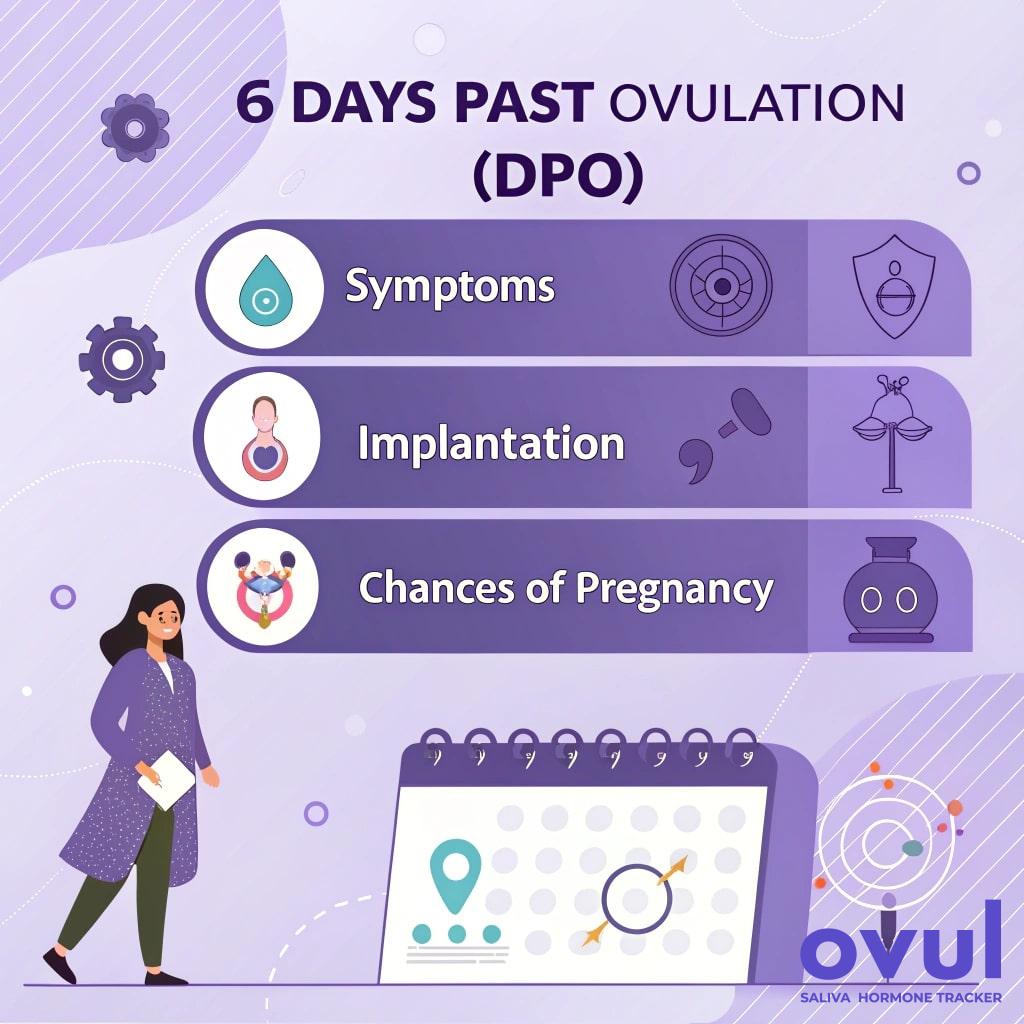
What Happens in Your Body at 6 DPO?
After ovulation, the corpus luteum — the temporary gland formed from the follicle that released the egg — secretes progesterone. This hormone thickens the uterine lining (endometrium), stabilizes body temperature, and creates the optimal environment for a fertilized egg to implant.
If fertilization has occurred, the zygote begins dividing into a blastocyst as it travels down the fallopian tube toward the uterus. Implantation can start as early as 6 DPO, but most often happens between 8 DPO and 10 DPO.
A landmark study published in The New England Journal of Medicine (1999) found that implantation on day 6 occurred in fewer than 0.5% of women, confirming that while possible, it’s extremely uncommon.
💡 To determine your fertile window more accurately, consider using a digital ovulation test that detects hormonal shifts before ovulation begins.
Common 6 DPO Symptoms
Many women report subtle physical or emotional changes at this stage, but most are driven by progesterone rather than pregnancy itself.
Typical 6 DPO symptoms include:
- Mild cramping. Light twinges caused by uterine muscle sensitivity.
- Breast tenderness or fullness. Temporary swelling due to hormonal fluctuations.
- Fatigue. A mild increase in metabolism can cause drowsiness.
- Mood changes. Irritability or emotional sensitivity from shifting hormone levels.
- Bloating or constipation. Progesterone slows intestinal movement.
- Headaches or nausea. PMS-like reactions to luteal-phase hormones.
It’s important to remember that these sensations occur in both pregnant and non-pregnant cycles. Hormonal activity after ovulation mimics early pregnancy so closely that no 6 DPO symptom can confirm conception.
If you suspect a hormonal imbalance or irregular ovulation, you can use a PCOS self-assessment quiz to identify possible signs of polycystic ovary syndrome.
6 DPO and Implantation — The Scientific View
Implantation occurs when the blastocyst embeds itself into the uterine lining — the true beginning of pregnancy. Before implantation, even a fertilized egg produces no measurable hCG (human chorionic gonadotropin), the hormone detected by pregnancy tests.
Most implantations occur 8–10 days after ovulation, and detectable hCG appears about 48 hours later. Testing at 6 DPO will almost always yield a false negative, even if conception has taken place.
For more precise insights into your cycle, try a smart fertility tracker that analyzes salivary hormone patterns and automatically detects your fertile days.
Cervical Mucus and Vaginal Discharge
After ovulation, cervical mucus usually becomes thicker and creamier under progesterone’s influence. Around 6 DPO, some women experience a brief increase in moisture — often linked to a secondary estrogen surge mid-luteal phase.
This does not indicate renewed fertility or pregnancy. The only consistent pattern is that clear, stretchy “fertile” mucus appears before ovulation, not after.
You can monitor your patterns with an ovulation calculator and fertility tracker to understand your individual fertile window more accurately.
Can You Take a Pregnancy Test at 6 DPO?
Technically, yes — but it’s too early for a dependable result.
Even the most sensitive early-detection tests require hCG levels above 10 mIU/mL, which rarely occur before 8–10 DPO.
Testing too early often leads to confusion because:
- Implantation may not yet have occurred.
- hCG levels remain below detectable limits.
- Evaporation lines can mimic faint positives.
For the most accurate results, wait until 12 DPO or the first day of your missed period before testing.
6 DPO Symptoms If Pregnant — Any Difference?
Not significantly.
Until implantation happens and hCG begins circulating, your body’s hormonal profile is nearly identical whether you’re pregnant or not.
Some women who later confirm pregnancy recall early sensations — heightened smell, vivid dreams, mild cramps, or fatigue — but these are retrospective interpretations, not diagnostic signs.
Tracking such sensations in a cycle log or period tracker over several months can help you recognize your own baseline patterns.
Your Chances of Pregnancy at 6 DPO
If intercourse occurred within the fertile window (two days before through the day of ovulation), conception probabilities per cycle average 20–30% for women under 35, gradually decreasing with age.
By 6 DPO, fertilization has already occurred (if conception happened), and the embryo is now traveling toward the uterus. The key factor now is implantation success, which depends on:
- Embryo quality
- Endometrial receptivity
- Hormonal balance
Emotional Side of the Two-Week Wait (TWW)
The two-week wait between ovulation and menstruation can be emotionally challenging. It’s normal to analyze every symptom, second-guess sensations, or feel anxious for confirmation.
Experts recommend focusing on self-care, maintaining hydration, getting adequate sleep, and supporting your body with balanced nutrition.
Stress hormones such as cortisol can affect luteal function, so activities like yoga, light walks, or journaling may genuinely support well-being during this phase.
Key Takeaways
- 6 DPO is too early for reliable pregnancy symptoms or tests.
- Implantation typically occurs 8–10 days post-ovulation.
- Progesterone drives most physical sensations at this stage.
- Early testing often leads to false negatives.
Focus on patience, rest, and gentle self-care during the two-week wait.