Skip links
2 dpo

2 DPO — What Happens Two Days After Ovulation

Two days after ovulation marks the early stage of the luteal phase, when the body completes one of the most important reproductive processes — the release of an egg. Although the fertile window is now closed, hormonal activity continues behind the scenes. For people trying to conceive, understanding what happens at 2 DPO helps interpret body signals more calmly and reduce stress during the two-week wait.

What Does 2 DPO Mean?

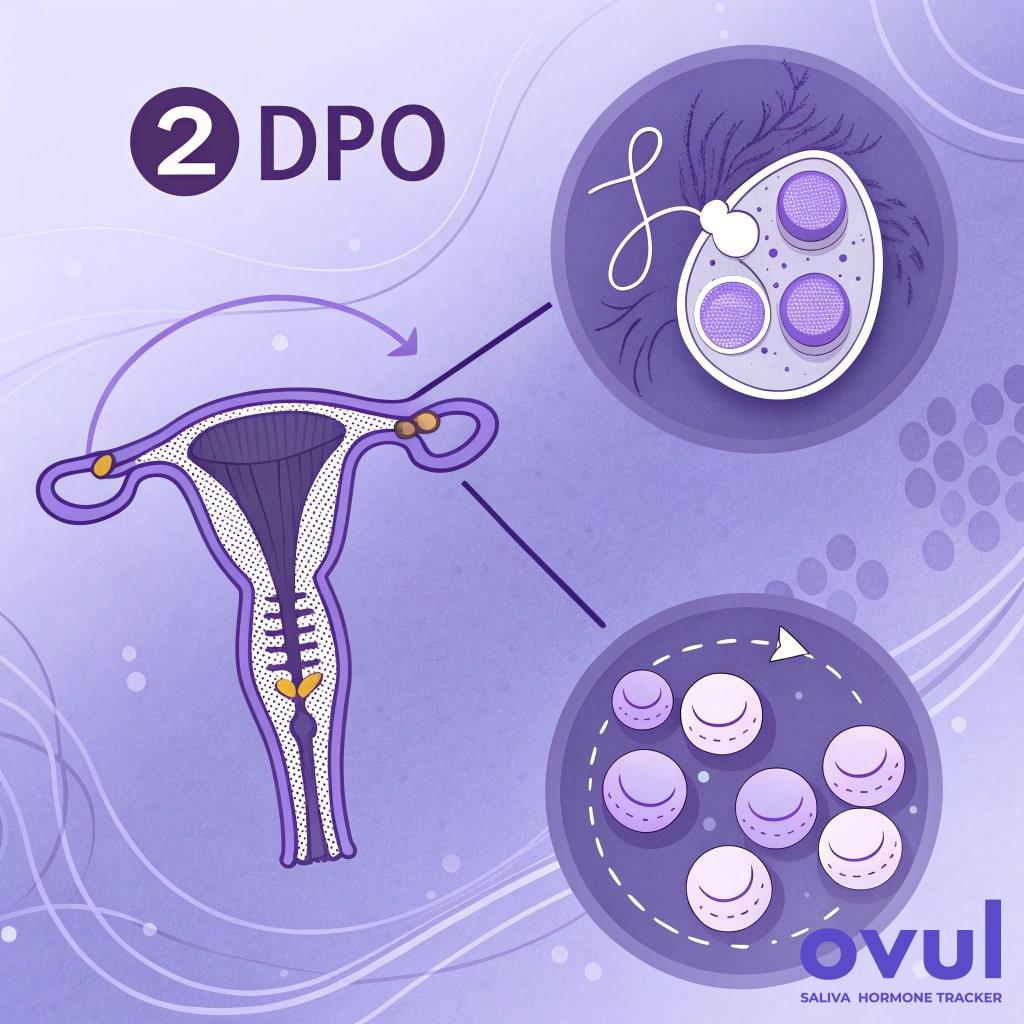
2 DPO (two days past ovulation) is the second day after the egg is released from the follicle. If sperm met the egg during ovulation, fertilization could have occurred within the next 12–24 hours. The fertilized egg, now called a zygote, starts dividing and moves slowly through the fallopian tube toward the uterus. If fertilization didn’t happen, the egg will degenerate and be reabsorbed by the body. In both cases, hormonal changes continue to prepare the uterus either for implantation or for the next cycle.

Hormonal Changes After Ovulation

After ovulation, the levels of luteinizing hormone (LH) and follicle-stimulating hormone (FSH) drop sharply. The ruptured follicle transforms into a corpus luteum — a temporary endocrine structure that produces progesterone and smaller amounts of estrogen.
Progesterone stabilizes and thickens the uterine lining, while estrogen supports cervical mucus and endometrial growth. These hormones continue to rise from 1 DPO to around 9 DPO, reaching their peak in the mid-luteal phase to create ideal conditions for possible implantation.

2 days past ovulation
1 3 e1760361460266

Estrogen & Estradiol Test at Home

What Happens in the Body at 2 DPO?

At 2 DPO, a fertilized egg (if conception occurred) is still inside the fallopian tube. It undergoes several stages of cell division — from a zygote to a morula, then to a blastocyst — as it travels toward the uterus.
Implantation usually occurs between 6 and 10 DPO.
If no fertilization took place, the egg disintegrates without any noticeable symptoms, but progesterone continues to rise for several days, keeping the endometrium ready just in case.

common-2-dpo-symptoms-min

Common 2 DPO Symptoms

Most people don’t feel significant changes two days after ovulation. However, some may notice mild signs caused by hormonal shifts:

  • Light bloating or gas retention
  • Breast tenderness or sensitivity
  • Low abdominal cramps or twinges
  • Mood swings or irritability
  • Slight increase in basal body temperature (BBT)
  • Thicker or creamier cervical mucus

These sensations are part of normal luteal-phase physiology, not early pregnancy.
At this stage, implantation bleeding cannot occur because the embryo hasn’t reached the uterus yet.

Ovulation Bleeding and Your Cycle: 10 Common Questions Answered 

2 dpo symptoms

Can You Feel Pregnant at 2 DPO?

Not yet. Even if fertilization occurred, your body hasn’t begun producing human chorionic gonadotropin (hCG) — the hormone detected by pregnancy tests.
Early pregnancy symptoms typically appear only after implantation, around 6–10 DPO. Any fatigue, nausea, or mild cramping at 2 DPO are most likely due to natural hormone fluctuations rather than pregnancy itself.

Why You Shouldn’t Take a Pregnancy Test Yet

Testing at 2 DPO is far too early and may lead to false-negative results. Even highly sensitive early detection tests can’t pick up hCG until several days after implantation.
For accurate results, it’s best to wait 10–12 DPO or until the expected period date.

How to Manage the Early Luteal Phase

The two-week wait can feel endless. These simple strategies can help you stay balanced and emotionally grounded:

  1. Stay busy — focus on work, hobbies, or gentle exercise to avoid overanalyzing symptoms.
  2. Maintain healthy habits — limit caffeine and alcohol, quit smoking, and start taking folic acid.
  3. Track your cycle — record temperature, discharge, and mood patterns to better understand your body.
  4. Practice relaxation — yoga, meditation, or journaling can lower stress and support hormonal balance.

Seek support — open communication with your partner or a counselor helps reduce emotional tension.

2
OVUL

Ovulation Calculator & Fertility Tracker

What Happens Next

Starting around 6 DPO, a fertilized egg may reach the uterus and begin implantation — the process of attaching to the uterine lining. Only after this stage does the body start releasing hCG, which triggers recognizable pregnancy symptoms such as fatigue or light spotting.

Understanding each DPO stage allows you to interpret body signals correctly and reduce unnecessary anxiety during the TTC (trying to conceive) journey.

5 Star Customer • Support
Easy Home Ovulation Tracking

Frequently Asked Questions About 2 DPO

No. The egg survives about 12–24 hours after ovulation, so by 2 DPO the fertile window is closed. However, if fertilization already occurred, pregnancy may have begun invisibly.

Mild cramping may result from the follicle’s rupture or progesterone activity, not from implantation.

At 2 DPO, it’s too soon. Nausea can result from hormonal changes or stress, not hCG.

Still have a question? Contact us?

Woman holding Ovul AI app-based saliva fertility tracker and ovulation test next to a grapefruit half, laying on a white bed

The Bottom Line

At 2 DPO, pregnancy symptoms are unlikely because implantation hasn’t occurred. However, this phase plays a crucial biological role: hormones like progesterone and estrogen work together to prepare your body for possible pregnancy. Recognizing these changes — without over-interpreting them — helps you stay calm, informed, and confident through your fertility journey.

News and blog

Latest Posts

FREE APPS

Free Period Tracker Apps – Start Free, Unlock Premium

Leave a comment